
Good questions
"The exodus from Egypt happened only for my sake"
Pesach is approaching rapidly, the world around us is violent and uncertain, but we shouldn’t ignore this fascinating parasha and its intricate descriptions of the laws of sacrifices. In fact, one of these laws reminds us very much of the Pesach experience. The presence of chametz, leavened grains, was forbidden in [almost] all the sacrifices in the tabernacle in the desert and in the Temple in Jerusalem, and was forbidden to the priests who ate the leftovers of the mincha (grain offering). Last week’s parasha makes a similar statement:
כׇּל־הַמִּנְחָ֗ה אֲשֶׁ֤ר תַּקְרִ֙יבוּ֙ לַי—הוה לֹ֥א תֵעָשֶׂ֖ה חָמֵ֑ץ כִּ֤י כׇל־שְׂאֹר֙ וְכׇל־דְּבַ֔שׁ לֹֽא־תַקְטִ֧ירוּ מִמֶּ֛נּוּ אִשֶּׁ֖ה לַֽי—הוה׃
No meal offering, which you shall bring to the Lord, shall be made with leaven: for you shall burn no leaven, nor any honey, in any offering of the Lord made by fire. (Leviticus 2:11)
Different interpretations have been given as to why this is. Maimonides considered chametz and honey to be integral parts of pagan worship, and were thus forbidden to the people of Israel (Guide III:46). Others had more psychological explanations: the medieval Spanish work known as Sefer Ha-Hinukh (mitzvah 117) says that bread and products that take a long time to rise are contrary to the spirit of alacrity that is meant to characterise energetic people eager to do God’s will as quickly as possible. As for honey, he says that just as rushing to eat only sweet food is immature and also unhealthy, having this detail in the sacrifices teaches one to be thoughtful in their decisions. It’s not that sweetness or pleasure is a bad thing in itself [the Talmud says that if there would have been honey mixed in the incense, nobody would have been able to stand the wonderful fragrance], it just seems that the process of acquiring it has value, and gluttony eventually makes it less precious.
We might say the same about Pesach itself. It’s a joyous time, a yom tov, a deep and meaningful experience — and yet rushing into the festival is not a good idea. One prepares for it, physically in terms of cleaning and cooking and arranging, and also intellectually. Nobody remembers what they learned last year, and need to check again if quinoa is kosher [yes] and how early or late one can start the seder [nightfall, except for exceptions]… the first law in the Shulchan Aruch’s halakhot of Pesach (OH 429:1) is that one should spend thirty days asking questions about Pesach. It’s not only because the answers are important, but also because the process of asking questions engages us in the sacred time that we create through and beyond all the individual details.
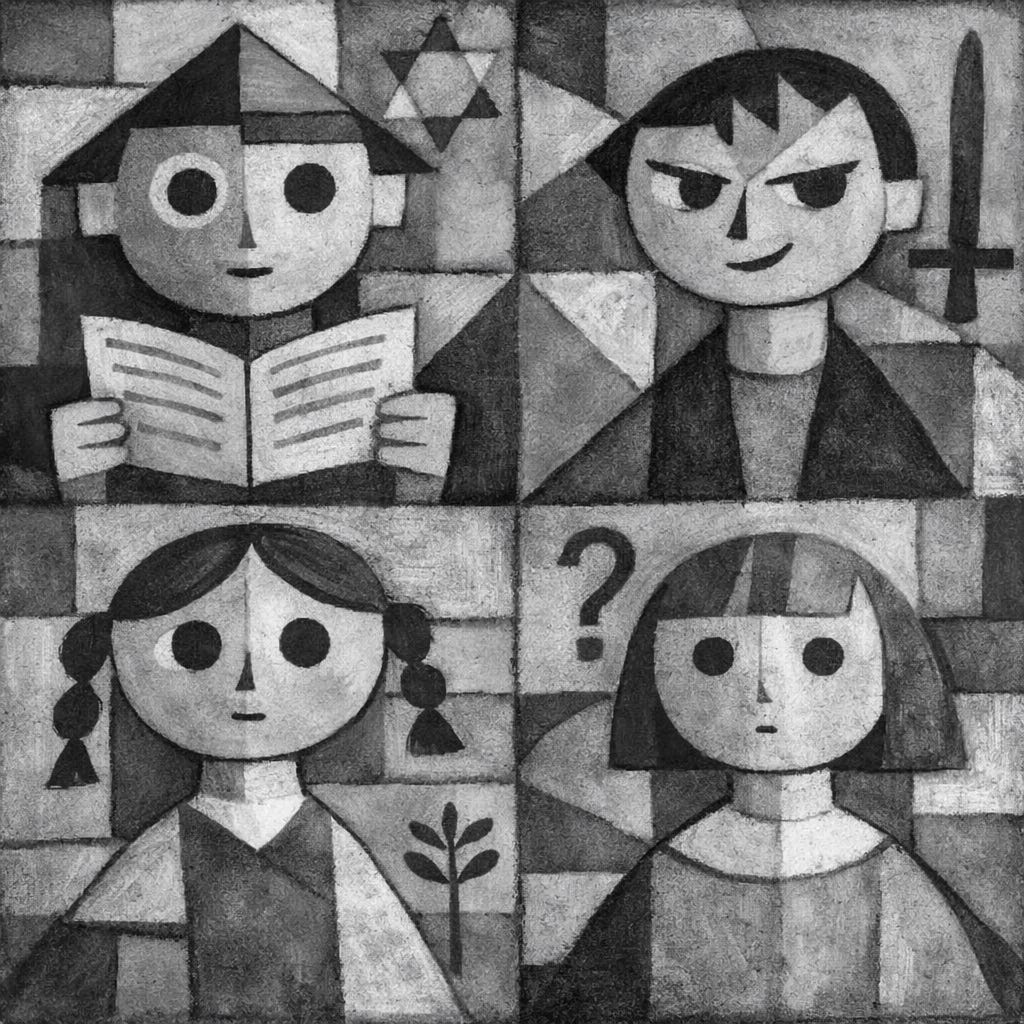
Asking questions is central to the Pesach seder, of course. We have the classic four questions, the ma nishtana text printed in the haggadah, but it’s clear from the sources that this was a last resort, a way to encourage people who for whatever reason were unable or unwilling to ask their own questions (OH 473:7). We ask, we share stories, we argue lovingly, we’re shy guests or awkward hosts, we speak. One of the explanations of the description of matzah as lechem ‘oni translates it, not as ‘bread of poverty’, but as ‘bread upon which we give many answers’.
If we’ve been saying for generations that it’s important to ask questions, in today’s world it’s become an imperative. Our children are growing up in a world where information is more accessible than ever before, but the means to access it are invariably through questions and prompts. If one doesn’t know how to ask the right question, the answer is distorted. Schools and businesses are realising that this is one of the most precious skills — AI can deal with programming, market research, content writing, translation and so on, but [for now] needs to be asked to do so. Those who can question will do well, one can already study ‘promptology’ and become a prompt engineer, an asker of questions to attain the best use of the knowledge available. Some of these skills are also technical, a new form of rhetoric, but those who will succeed are surely those who excell in curiosity, a human trait that hasn’t been able to be artificially reproduced [yet]. It’s tempting to see the haggadah’s story of the four children through this perspective. They each give a different prompt to their father, and receive a different output. Even the one who doesn’t ask receives a pre-generated response from the father, encouraging him to ask more.
Sometimes someone will ask me a question, and my response will start with “that’s a very good question”. What’s the halachic definition of a good question? I started thinking about this (refusing to use AI for Torah study!), and — it’s a very good question! Everyone knows that questions and debates are the essence of the Talmud and other rabbinic texts, often forming a loud intergenerational conversation to which we can offer our own voice if we find new questions or insights. But not every question is encouraged. The mishnah (Chagigah 2:1) forbids four questions: what is above the skies, what is below the earth, what came before the world, and what will come after it. There are some questions that get people into trouble. Rabbi Yirmiyah is expelled from the academy after asking about the ritual status of a bird with one foot within the limit for returning it to its nest and the other foot outside of this limit (Bava Batra 23b). Rabbi Paleimu asks where a man with two heads should place his tefillin, and was threatened with excommunication (Menachot 37a). None of these interrogations are particularly unusual for the Talmud, and my feeling is that it’s not their content that makes them ‘bad questions’, but their tone. A question should create a relationship of caring — one person cares enough about the answer to seek it, and the other cares enough about the question to answer it. Questions that come from a place of hubris and pride (chametz!) are not within the same intellectual and spiritual project as those dedicated to the search for truth as a way of life.
Perhaps this is the problem with the ‘wicked’ son in the Haggadah. His question isn’t such a bad one in itself, but the tone is defiant and brings out the worst in the father. (We know, for example, that political critique can be said with a destructive tone, or from a place of caring and rebuilding, even if the two ultimately say similar things!)
But perhaps the most important Pesach questions don’t take place between father and son or student and master, but within each and every one of us. The Netziv [Naftali Tzvi Yehuda Berlin of Volozhyn], combining two passages in the Talmud, writes that each and every person must consider that the exodus from Egypt happened only for his or her sake [Imrei Shefer, p.176], and thus needs to reflect on what their unique contribution to the world is that merited such a great miracle to take place for them.
Maybe we associate it more with Yom Kippur, but deep introspection and reflection are part of the Pesach process too. It’s not just the chametz in the house and in the kitchen that we need to seek out and remove, but the clutter in our own minds. That, too, is done by asking ourselves strong and honest questions, but good questions, those that come from curiosity and care for ourselves.
On this Shabbat Hagadol, I wish everyone the wisdom and the courage to ask good questions, and may Pesach be the start of a better world for us all.
Shabbat shalom!